Leadership Lessons Learned in the Scree Fields of Aneroid Mountain
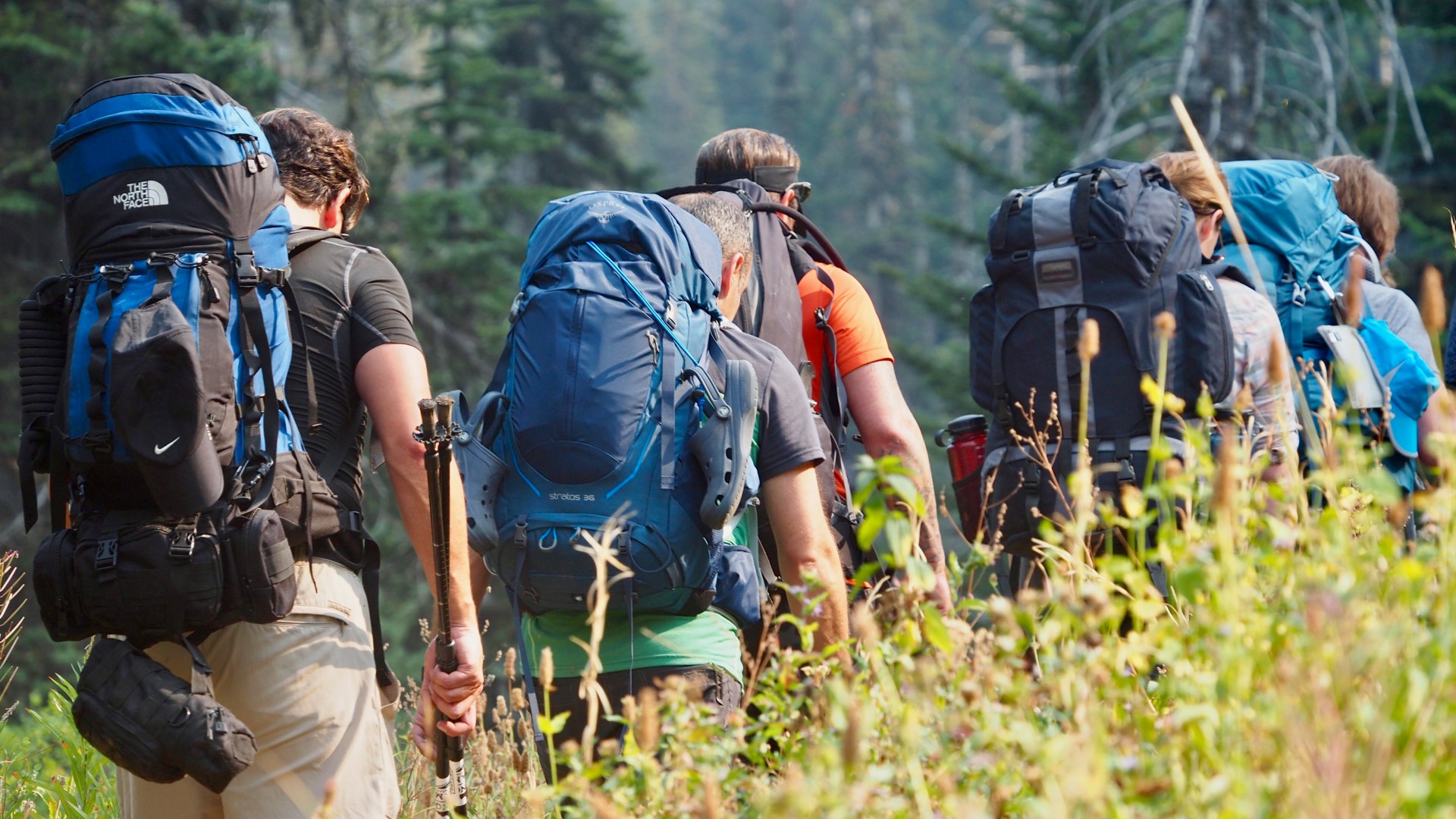
Last week, I was fortunate enough to attend a leadership seminar called The Crucible – hosted and developed by Jan Rutherford and facilitated by Chris Schmitt. Executive business leaders and military veterans, 14 in total, were brought together to share their knowledge and experience related to leadership in the beautiful Wallowa Mountains of Oregon.
After making many mistakes as a leader and manager over the years, I can now appreciate the opportunity to learn in a closed environment where I can test different ideas and theories. Recently, I was able to think about leadership from two very different perspectives – one where you focus on the mission and purpose, and the other where you focus inward on your people.
Chris and Jan did a phenomenal job crafting an experience and environment where lessons could be shared and participants felt comfortable taking risks. At first, I thought they were just being humble when they said, “It is all about the other people on this trip – they are the ones you will learn from.” However, I soon saw that the weekend was less a traditional leadership seminar and more a carefully guided team experience, one ultimately defined by our own actions. The conversations shared along the trail, while making dinner, or during breaks were rich in content and genuine in nature. Everyone on this trip wanted to share – and most importantly – they wanted to learn.
The group was divided in two teams – Team Aneroid and Team Wallowa. On the onset of the trip, Jan quietly influenced the way each team would operate. He gave everyone on Team Wallowa roles, defined responsibilities, and clarified expectations. He let Team Aneroid define accountability for themselves. We saw the impact of these different expectations during the main event, our hike up Aneroid Mountain:
Team Aneroid (Given Little Guidance)
Planning. Team Aneroid quickly set a hierarchy by looking to their most experienced member, Josh. He possessed 23 years of experience in Army Special Operations and deployed more than twenty times overseas. Many executives in the group had little hiking experience, so they quickly deferred to him. The team did not think to define other roles.
Movement. The team kept open communication lines and moved out with Josh in the lead while I ensured everyone was alright from the rear. Individual buddy teams looked out for each other and communicated when a break was needed. Josh and the team determined the best route by looking to maximize safety and efficiency. Team Aneroid moved out at much faster pace and they looked to be far ahead of Team Wallowa throughout most of the hike.
Conflict. Along the way, Team Aneroid ran into a few hurdles. Individuals on the team found parts of the route extremely unnerving and they expressed their discomfort in the moment. The scree field traverse brought tensions to a new high. Protocols were developed mid-route to address these specific pain points. Additionally, spacing was difficult to maintain throughout the hike since certain individuals struggled more than others.
Team Wallowa (Guidance/Expectations Defined)
Planning. Team Wallowa, in contrast, had already assigned each of their members a role, set expectations for the day, and discussed individual preferences and comfort levels. There were a few members in the group with a high level of physical fitness, but overall there was a smaller contrast in outdoor experience.
Movement. The team was led by Clay, who made sure to clearly define each leg of the journey for his team as they went along. He checked in and allowed everyone to be part of the navigation in order to find the path of least resistance and help them feel connected to the mission. The team moved down into the valley and up the most gradual slope-angle they could find. It was a longer route in distance, but easier on each individual.
Conflict. The overall pace and direction of the team was determined by the person with the most discomfort, so the team experienced very little conflict. They got ahead of problems by empowering everyone’s voice. Those who wished to push harder were humble enough to buy into the slower pace for the betterment of the team.
Results. Both teams met each other at the saddle just one hundred meters below the summit, but that doesn’t mean there wasn’t a big difference between the leadership approaches chosen. Which team learned more about its members and took on a growth mindset? Which team could have kept going if the objective changed?
Conclusion
Takeaways. In my opinion, leadership styles are situationally dependent. Team Aneroid chose the best style if they were taking on a growth mindset and looking to maximize the efficiency and productivity of the team over the long-term. Individual members were exhausted when they finished the hike, but the team learned a lot about themselves and were better because of the conflict and how they learned to resolve it. However, I believe Team Wallowa chose the right leadership style if reaching the top of Mount Aneroid was the final objective. In the short-term, Team Wallowa minimized conflict and risk by looking inward at their members and determining the most logical path forward as a group. They accomplished the mission, but I am not sure if they were better suited to handle a more adverse environment later down the road. I believe it all comes down to short-term vs long-term timeframes.
Although it might be on-trend to foster an overly collaborative approach that focuses inward on the needs of each indivual, I believe that this leadership style fails to push each member to be their best. This style forces others to cater to the least comfortable member. In contrast, a mission and purposed focused team may run into more conflict in the short-term, but they will challenge each individual to become self-reliant and, with the right oversight and guidance, a more productive member of the team.
A huge thank you to Jan and Chris and our corporate sponsors for making this event possible and allowing us to learn from one another.
See you out there on the trails! – Michael


 A Natural Lens